| Travel distance | 189 miles |
|---|---|
| Fastest time | 2h 14m |
| Daily trains | 40 |
| Ticket from |
Traveling by train from Turin to Bologna is an easy and comfortable journey. The distance from Turin to Bologna is 189 miles, and many high-speed trains make the trip in just 2 hours and 14 minutes.
The Turin to Bologna train takes you southeast through Italy, crossing the picturesque Piedmont and Emilia-Romagna regions. Most high-speed trains travel directly from Turin to Bologna, often with a brief stop in Milan; you won’t be required to change trains. However, if you’re traveling on a slower and less expensive regional train, you may be required to transfer from one train to another.
Train from Turin to Bologna
Most trains leave Torino Porta Nuova Station several times per hour for Bologna Centrale Station—averaging 40+ trains per day (based on typical schedules). The earliest train to Bologna leaves around 5:50 a.m. The last train to Bologna around 8:50 p.m.
Note that weekends and holidays typically mean less frequent service and sometimes longer travel times.
Amenities on the trains between Turin and Bologna
Italy’s high-speed trains are equipped with air conditioning and electrical outlets at your seat to charge devices. There is wi-fi on most trains, but the signal will drop in tunnels and at stations. Expect a cafe car on every train, as well as a food cart that brings snacks, sandwiches and beverages to your seat. At the end of each car you’ll find a restroom and plenty of racks to store large luggage.
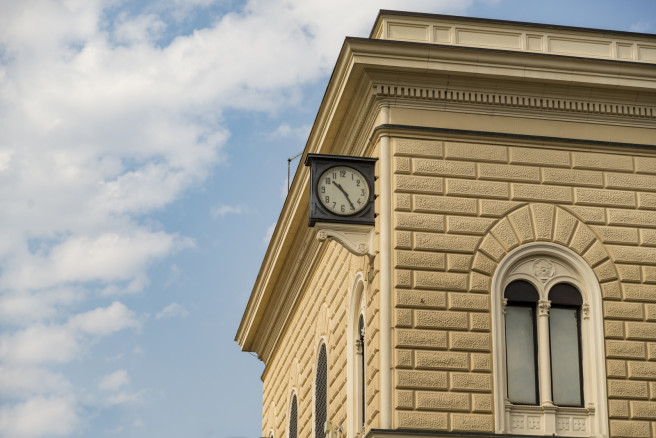
Torino Porta Nuova is Turin's main railway terminus and the third busiest station in all of Italy.
Opened in 1864, the station boasts a grand, Neoclassical façade that overlooks Piazza Carlo Felice in the heart of the city, blending historical charm with modern convenience. As a terminal station, trains arrive perpendicularly to the main building.
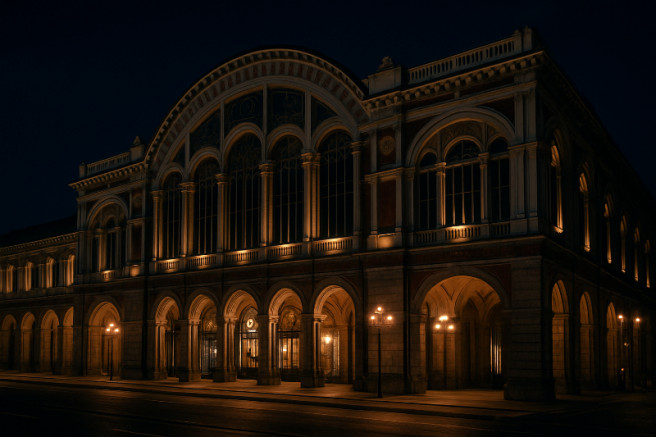
Bologna Centrale is one of Italy's busiest railway stations and a major hub for both high-speed and regional rail lines, centrally located in the heart of the Emilia-Romagna region.
The station boasts a mix of historic and modern architecture, including its grand 19th-century facade and the newer, futuristic platforms for high-speed trains located underground. It serves as a crucial intersection for north-south and east-west routes across Italy.